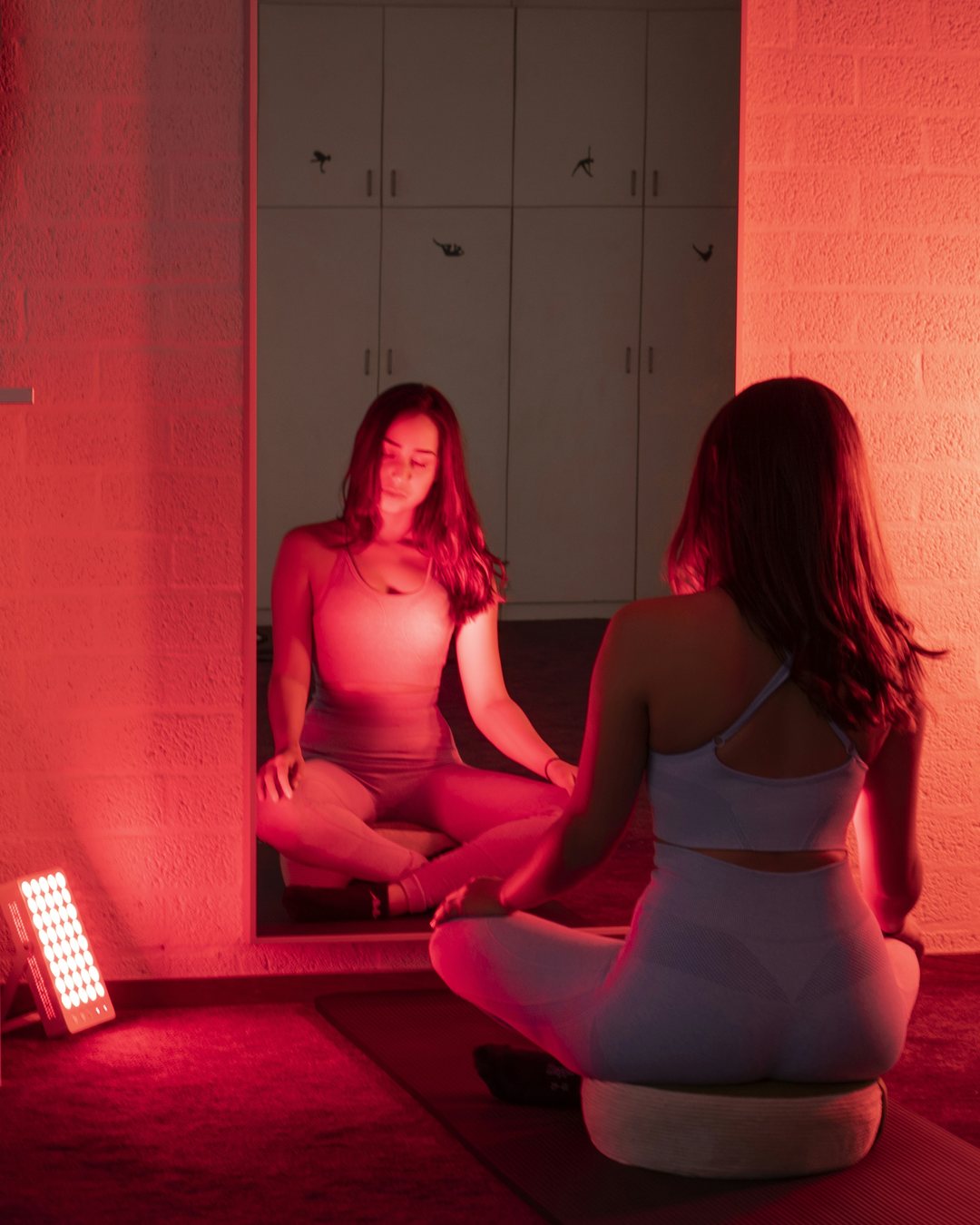

Deep focus: long, quiet hours on one hard thing. The adult brain keeps changing with practice, past 50 too. Seven daily practices, and what the research found.
One task, one long block.
A review of task-switching research found people are substantially slower, and usually make more errors, right after a switch, even between simple tasks. Time to prepare shrinks the cost but does not remove it (Monsell, 2003).1
Alerts off for the block.
In one lab study, people whose phones got calls or texts they did not answer made more errors on an attention task than people whose phones stayed silent. The authors judged the cost comparable to what earlier studies found for actually using a phone (Stothart et al., 2015).2
Phone out of sight. A small gain, at best.
The well-known claim that a phone merely in view drains the mind has held up only in part. A meta-analysis of 56 studies and 7,093 people found one effect that held, a dip in working memory smaller than first claimed, and no clear effect on attention or the other abilities tested. The author calls the evidence limited (Parry, 2024).3
A brisk twenty minutes before the hard block.
A review for the US physical activity guidelines found strong evidence that one bout of moderate to vigorous exercise gives thinking a small, short-lived lift, most consistently in executive function. Bouts of 11 to 20 minutes did best in one meta-analysis it drew on. Trials of regular exercise showed gains too, on moderate evidence (Erickson et al., 2019).4
One new skill. Hard at first.
In a small study, adults aged 50 to 67 spent three months learning to juggle, less proficiently than 20-year-olds. Gray matter increased in the same visual-motion area seen in the young (Boyke et al., 2008).5
Short pauses while you practice.
In a small study of 27 adults learning a keyboard sequence in 10-second bouts with 10-second rests, the early improvement came during the rests, not during practice. The authors read it as the brain consolidating the skill within seconds (Bönstrup et al., 2019).6
Learn by day. Sleep on it.
In one study, people trained on a motor skill were about 20% faster after a night of sleep, with no loss of accuracy. The same hours awake brought no significant gain (Walker et al., 2002).7
The focus is yours. The rest, handled at your house.
Request a walkthroughSources
- 1. Monsell S, Task switching. Trends in Cognitive Sciences 7(3):134-140 (2003). https://doi.org/10.1016/S1364-6613(03)00028-7
- 2. Stothart C, Mitchum A, Yehnert C, The attentional cost of receiving a cell phone notification. Journal of Experimental Psychology: Human Perception and Performance 41(4):893-897 (2015). https://doi.org/10.1037/xhp0000100
- 3. Parry DA, Does the mere presence of a smartphone impact cognitive performance? A meta-analysis of the "brain drain effect". Media Psychology 27(5):737-762 (2024). https://doi.org/10.1080/15213269.2023.2286647
- 4. Erickson KI, Hillman C, Stillman CM, Ballard RM, Bloodgood B, Conroy DE, Macko R, Marquez DX, Petruzzello SJ, Powell KE, Physical activity, cognition, and brain outcomes: a review of the 2018 Physical Activity Guidelines. Medicine & Science in Sports & Exercise 51(6):1242-1251 (2019). https://doi.org/10.1249/MSS.0000000000001936
- 5. Boyke J, Driemeyer J, Gaser C, Büchel C, May A, Training-induced brain structure changes in the elderly. Journal of Neuroscience 28(28):7031-7035 (2008). https://pmc.ncbi.nlm.nih.gov/articles/PMC6670504/
- 6. Bönstrup M, Iturrate I, Thompson R, Cruciani G, Censor N, Cohen LG, A rapid form of offline consolidation in skill learning. Current Biology 29(8):1346-1351.e4 (2019). https://doi.org/10.1016/j.cub.2019.02.049
- 7. Walker MP, Brakefield T, Morgan A, Hobson JA, Stickgold R, Practice with sleep makes perfect: sleep-dependent motor skill learning. Neuron 35(1):205-211 (2002). https://pubmed.ncbi.nlm.nih.gov/12123620/
General information. Not medical advice.
Photographs: Alicja Ziajowska and Negar Beygi on Unsplash.